
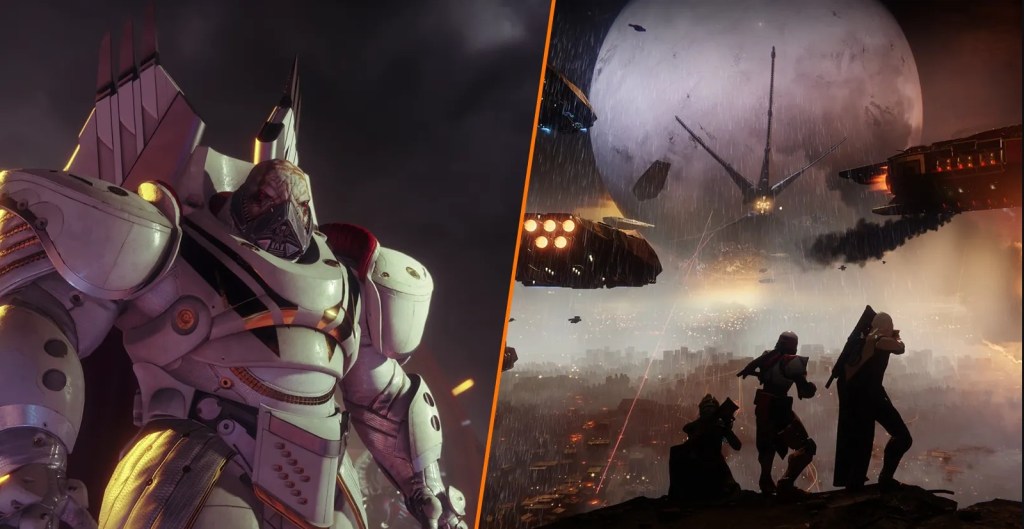
In a case that’s raising eyebrows across the gaming industry, Bungie—the developer of the long-running Destiny 2—is being sued for alleged copyright infringement by indie sci-fi author Matthew Kelsey Martineau, who writes under the name Caspar Cole. The lawsuit centres on claims that Bungie lifted major narrative elements from Martineau’s unpublished blog stories for the Red War campaign and Curse of Osiris expansion in Destiny 2.
The Allegations
According to court documents, Martineau alleges that Bungie’s writers directly borrowed from a series of posts he published on his personal blog between 2013 and 2014—years before Destiny 2 launched in 2017. He claims his work included a militarized faction called the Red Legion, flame-based weaponry, and war beasts—elements that closely match Destiny 2‘s Cabal forces introduced in the Red War storyline.
Most notably, Martineau draws comparisons between his antagonist “Yinnerah” and Destiny 2‘s Dominus Ghaul. Both are depicted as warlords cast out from their people, obsessed with acquiring god-like power, and ultimately meeting their end through a dramatic fall from grace.
Martineau also alleges the game features themes lifted from his writing, including mind-transfer technologies, massive space-faring vessels acting as superweapons, and a backdrop of apocalyptic stakes that align almost too neatly with his own worldbuilding.
Bungie’s Defense—and a Courtroom Misfire
In an attempt to dismiss the case, Bungie presented a somewhat unconventional defense. The studio submitted fan-made YouTube videos—some spanning over 10 hours in length—and Destiny-focused wikis as evidence of the game’s timeline and lore development. The goal was to show that their ideas predated or independently evolved from Martineau’s posts.
However, U.S. District Judge Susie Morgan wasn’t convinced. She rejected Bungie’s approach, citing that the court “will not rely on third-party materials of unverified authenticity” in lieu of formal discovery. With the dismissal denied, the lawsuit will now proceed into the evidence-gathering phase.
The Content Vault Controversy
An interesting twist in the case is Bungie’s own content vaulting strategy. In 2020, the developer vaulted the Red War campaign and its expansions, removing them from the live game. This decision has complicated Bungie’s ability to provide direct in-game evidence to defend itself, making archived videos and community content their fallback.
Critics argue this vaulting practice is not only problematic for fan preservation, but also now hinders Bungie in a legal setting. With key content inaccessible, proving narrative originality becomes much more difficult.
Bigger Implications for Live Service Games
This lawsuit could have broader implications beyond Bungie. As more live-service games rotate, modify, or vault content, the question arises: what happens when that content is central to a legal dispute? Are companies expected to preserve their own narratives indefinitely to defend against future challenges?
For Bungie, the stakes are high. If Martineau can successfully prove his claims in court, the studio could face damages and further scrutiny over its creative practices. And for Destiny 2, it puts one of the franchise’s most pivotal story arcs under a very different kind of spotlight.
As the case moves forward, 1-Up Games will keep you updated with all the latest developments.

 1-Up Games