
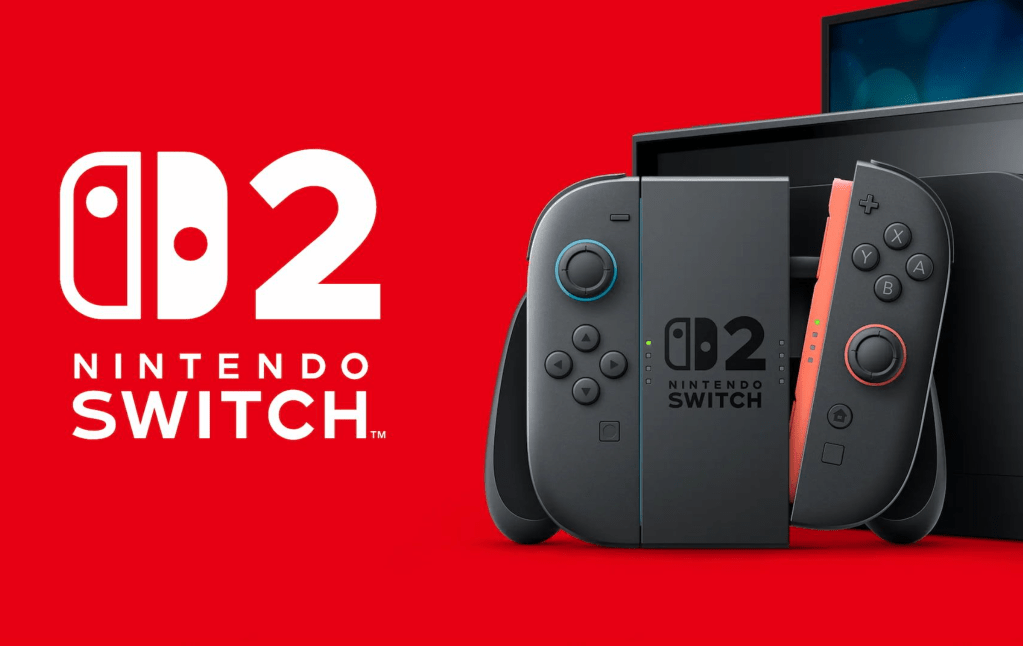
Nintendo appears to be making major moves behind the scenes ahead of the anticipated release of its next-gen console — officially dubbed the Switch 2. According to multiple reports, the Japanese gaming giant has partnered with Samsung to manufacture the system’s custom processor and is in talks to continue OLED display production for a potential future model.
A Strategic Shift in Silicon Production
Sources familiar with the matter have revealed that Nintendo is working with Samsung to fabricate the Switch 2’s custom chipset — a major departure from its previous reliance on TSMC for the original Switch’s Tegra X1 chip.
The new chip, developed by Nvidia and produced using Samsung’s 8nm process node, is expected to offer significant performance improvements while keeping costs and power consumption in check. Notably, the same 8nm node was used for Nvidia’s GeForce RTX 30 Series GPUs, which sets expectations high for handheld performance.
Samsung’s involvement could also play a key role in scaling production. Reports indicate that Nintendo aims to ship over 20 million units of the Switch 2 by March 2026 — a bold target that would require a smooth and reliable hardware pipeline. Partnering with Samsung, a leader in high-volume chip production, could be crucial in hitting that milestone.
OLED Model in the Pipeline?
The initial version of the Switch 2 is launching with a larger 7.9-inch LCD panel, complete with HDR support — a first for any Nintendo handheld. However, industry insiders suggest that an OLED refresh is already in early planning stages, with Samsung likely to reprise its role as the OLED supplier.
Samsung previously manufactured the 7-inch OLED displays found in the 2021 Nintendo Switch OLED Model, and sources claim the Korean tech giant is actively pushing Nintendo to continue using OLED technology in future iterations of the Switch 2.
While no release window has been locked in for an OLED model, it would follow a familiar Nintendo strategy. The company has historically launched upgraded models with enhanced displays or other hardware improvements midway through a console’s life cycle. If accurate, an OLED-equipped Switch 2 refresh could hit shelves in 2026 or beyond.
What This Means for the Switch 2’s Launch
The reported partnership with Samsung signals that Nintendo is gearing up for a high-demand launch, and more importantly, is trying to avoid the supply chain pitfalls that plagued both the Switch and many other consoles during the COVID-19 pandemic.
Nintendo has yet to officially confirm any details about the Switch 2 — including specs, release date, or pricing — but the growing number of credible leaks paints a clearer picture by the day. With Samsung handling both chip and potential OLED production, fans may be able to expect improved visuals, better battery efficiency, and a smoother launch rollout than we’ve seen in previous hardware generations.
Final Thoughts
Nintendo’s reported collaboration with Samsung on the Switch 2 represents more than just a vendor change — it’s a statement of intent. If these reports hold true, Nintendo is aiming to deliver a handheld-console hybrid that not only meets modern gaming standards but can also scale fast enough to meet unprecedented demand.



 1-Up Games