
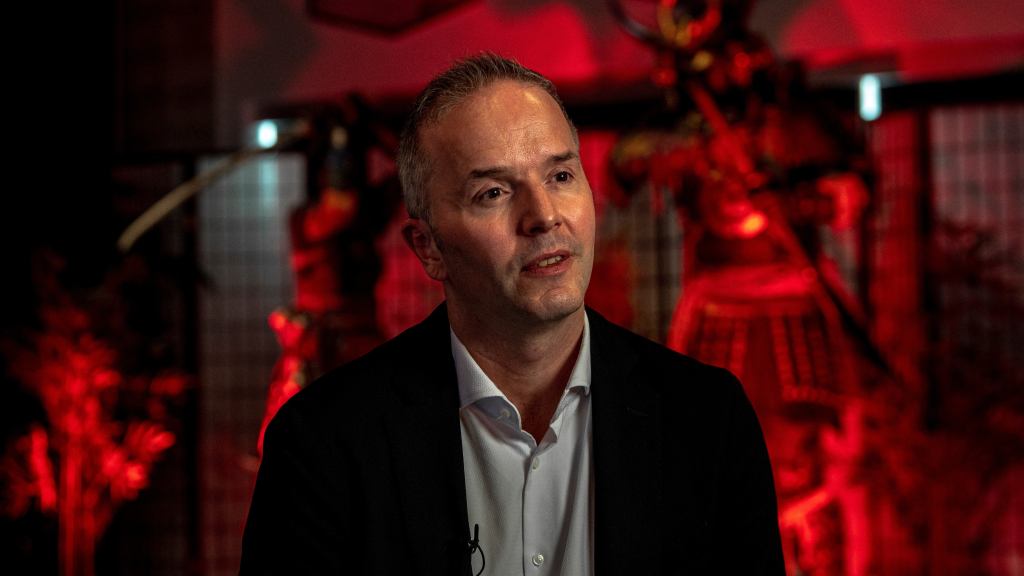
Ubisoft has confirmed that Marc-Alexis Côté, one of the longest-serving creative figures behind the Assassin’s Creed franchise, has left the company after more than twenty years. His departure arrives just two weeks after the creation of Vantage Studios a new internal division backed by Tencent that now oversees several of Ubisoft’s flagship franchises, including Assassin’s Creed.
Côté’s exit marks the end of an era for a developer whose fingerprints can be found across many of the series’ defining moments. Starting as a producer during the early years of Ubisoft Quebec, he rose through the ranks to become one of the creative leads shaping the direction of the franchise after its early success. His credits include game director on Assassin’s Creed III, creative director on Assassin’s Creed Syndicate, and lead roles on Freedom Cry, the well-received Black Flag expansion that focused on Adewale’s story.
In a statement shared with media outlets, Ubisoft framed his exit as part of a broader restructuring:
“Following the organizational adjustments made earlier this year, Marc-Alexis Côté has chosen to pursue new opportunities outside Ubisoft.”
However, Côté offered a different account on his personal social media channels, clarifying that the decision was not his own:
“I did not walk away. I stayed at my post until Ubisoft asked me to step aside,” he wrote, adding that the position offered to him within Vantage Studios “did not carry the same scope, mandate, or continuity” as his previous role.
A Quiet Reshuffle, a Loud Signal
The creation of Vantage Studios was announced in late September, with Ubisoft describing it as a way to “ensure focused, long-term stewardship of its global IP.” In practice, it appears to centralize creative control over major series such as Assassin’s Creed, Far Cry, and Watch Dogs under a single umbrella designed to streamline development and improve cross-studio collaboration.
Côté’s removal so soon after the announcement suggests internal disagreements over how much authority Vantage would have versus Ubisoft’s existing creative teams. For years, Côté had acted as a bridge between Montreal and Quebec divisions a position that allowed him to influence both narrative tone and production priorities. His departure could signal a more top-down approach under Vantage’s leadership.
Legacy of a Franchise Builder
Within Ubisoft, Côté was widely regarded as one of the architects of the modern Assassin’s Creed era. His push for larger-scale worlds and historical immersion helped define Assassin’s Creed Syndicate’s Victorian London setting, a game that balanced open-world exploration with character-driven storytelling. He was also an early voice in shaping what would eventually become Assassin’s Creed Infinity the franchise’s evolving hub platform.
Colleagues have described him as meticulous and collaborative, someone who encouraged mentorship within his teams. Those who worked with him during the Freedom Cry project recall his commitment to telling more personal and socially grounded stories within the Assassin’s Creed framework.
-
1-UP GAMES
RECENT NEWS
Our Gaming Hot Takes | Gamescast

Ubisoft has not named a successor, though internal sources suggest that several senior creative directors are sharing responsibility in the interim as Vantage Studios finalizes its leadership structure. The company’s next major release, Assassin’s Creed Codename Red, set in feudal Japan, is still expected to arrive in 2026.
Fans are naturally curious and somewhat uneasy about how this leadership change could affect the tone and scope of future titles. With Ubisoft’s restructuring still unfolding, it’s unclear how much creative freedom individual studios will retain under Vantage’s oversight.
Côté’s exit feels like a crossroads moment for Assassin’s Creed. The franchise that began as a historical adventure has grown into a sprawling multimedia universe, and every shift in its leadership ripples outward through years of planned projects.
For long-time players, the concern isn’t just about who’s steering the ship it’s about whether the next era of Assassin’s Creed can preserve the human stories and historical detail that made it resonate in the first place.


 1-Up Games