
Call of Duty: Black Ops 7 isn’t chasing high art or reinvention; it’s gunning for pure, unfiltered fun, and it rarely hesitates. The 22nd mainline Call of Duty leans heavily into the foundations laid by last year’s Black Ops 6 and treats this instalment as a wild companion piece. Its short and disappointing campaign, its expanded return-to-form Zombies offering, and a surprisingly sharp multiplayer package all pull in different directions yet somehow collide into something coherent. It’s noisy, constantly ridiculous, but welcoming to just about anyone who picks up a controller.
Where Cold War and Black Ops 6 flirted with espionage cinema this follow-up swerves into something far stranger. Treyarch and Raven aren’t trying to evoke Reagan-era distrust this time; they’re painting with the surrealism of nightmares. Taking place in 2035, nearly ten years after Black Ops II, the co-op story once again puts David “Section” Mason in the hot seat. Mason leads the Specter One unit as they confront yet another threat tied to Raul Menendez, whose legacy refuses to stay buried. Their investigation spirals into the dealings of The Guild, a robotics corporation headed by Emma Kagan, and quickly unravels into a psychological trip steeped in a viral agent that drags soldiers through their own subconscious terrors.
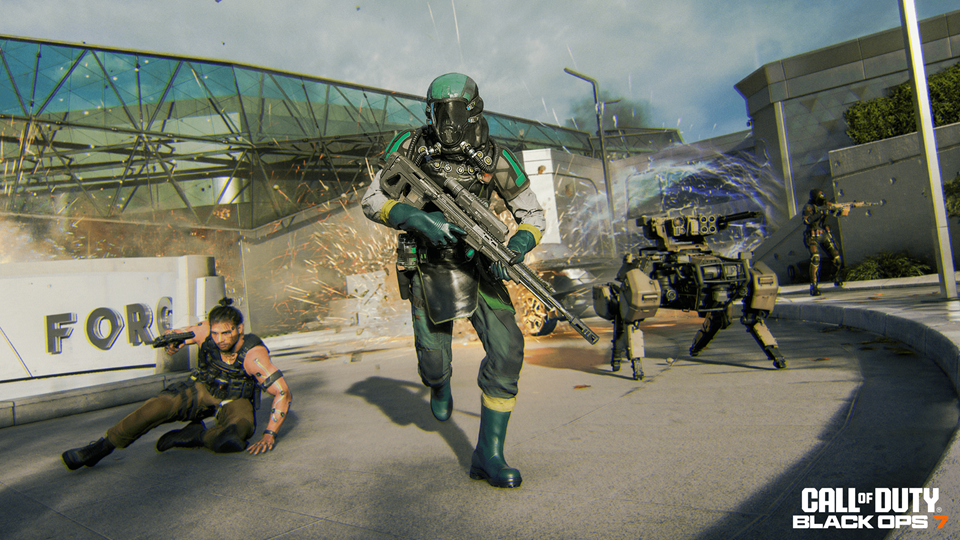
It’s an ambitious setup with a clumsy payoff. The campaign mixes paranormal imagery with combat arenas that feel really out of place yet somehow right at home. It name-drops icons from the series, revisits the iconic battles from the previous entries, and waffles between pulpy TV thriller and self-serious sci-fi. It works when it leans into close-quarters chaos, but most missions boil down to two verbs: clear a facility or dig through intel. When a game swings this hard stylistically, the repetition sticks out even more.
Black Ops 7 tosses out one of the franchise’s longest-running habits by swapping the usual single-player story for a cooperative PvE campaign. The Spectre One squad basically exists to justify letting up to four players blitz through the narrative together though the game technically allows you to run it alone if you really want to. I played it alone, and it didn’t take long to realize the campaign was clearly balanced around having all four slots filled.
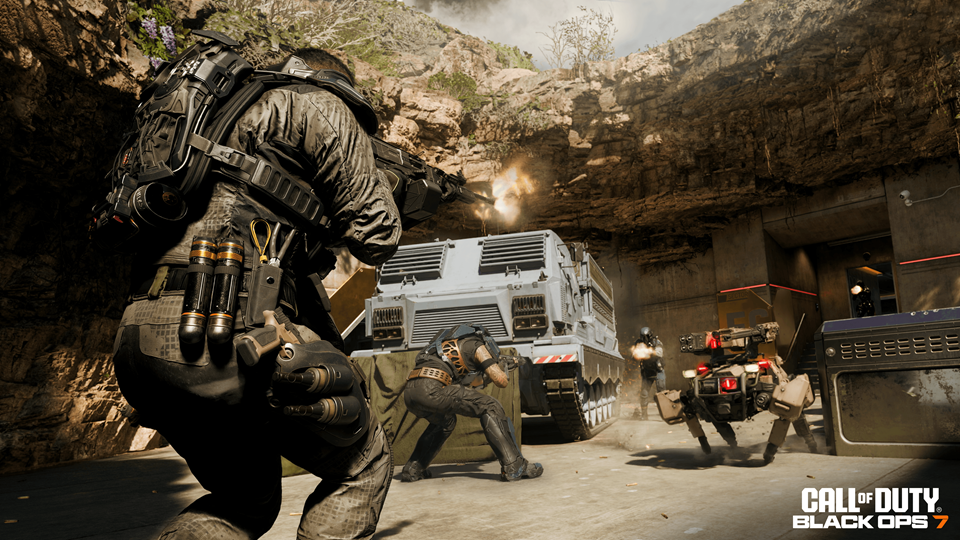
Part of the problem is that the game simply refuses to supply AI characters to replace missing teammates. If you’re not running a full crew, Mason’s squamate’s literally vanish during missions. They continue yammering away on the radio like nothing’s wrong, and then magically reappear in cutscenes as if they’ve been there the whole time. Stranger still, you can’t pick who you play as anyway not that it matters, because every member of Spectre One handles identically once the shooting starts.
Across its eleven missions, the PvE story leans heavily on oversized boss encounters that feel like theatrical finales more than actual tests of skill. Most of them operate on a simple loop: unload on the boss until it retreats into a brief, flashy AOE phase, survive that, and repeat until the thing falls over. It’s the same structure seen in other ambitious but flawed co-op titles like Resident Evil 6 nothing special on its own, but the whole experience gets infinitely better when you’re laughing your way through it with a friend.
And to be fair, there is a version of this formula that absolutely works. Whenever the game reins itself in, pushes you through tighter mission setups, throws disposable mobs at you, and mixes in quick puzzle beats, the campaign settles into a chaotic rhythm that’s genuinely entertaining. But that momentum collapses once the game starts layering in rainbow-tier weapons, absurdly tanky enemies, and boss fights that grow more awkward the longer they drag on.
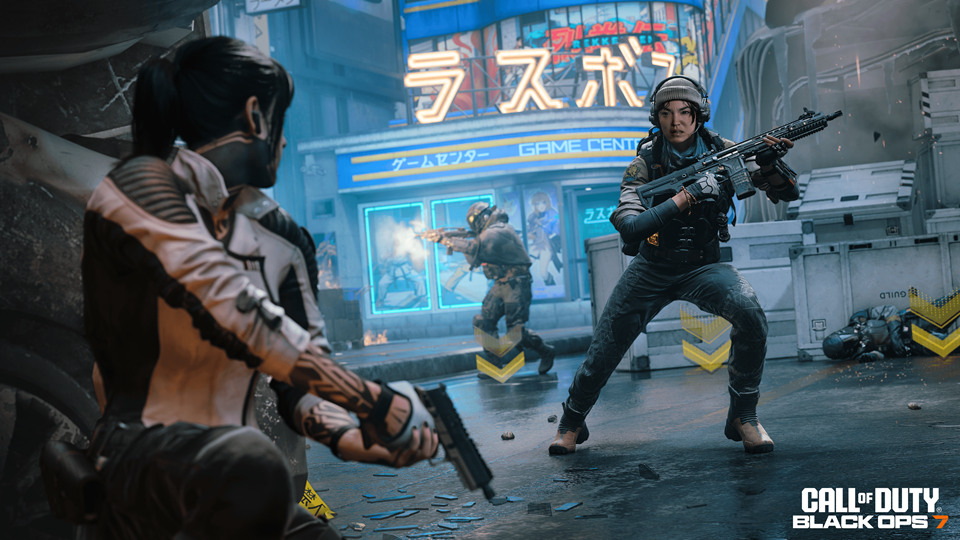
There is technically a gear progression system, though calling it that feels generous. You begin with basic, common weapons and gradually pick up rarer variants with additional attachments, kind of like a battle-royale economy stitched into a linear campaign. The issue is that the improved gear doesn’t feel any better because the enemies are quietly inflating their health bars to compensate. You shoot harder; they just soak up more bullets. Nothing really changes.
Enemy AI does the game no favour either. Most foes simply park themselves behind a doorway and wait for you to waltz in so they can jump out like budget haunted-house actors. At long range they tend to freeze completely, letting you pluck them off like paper targets. In close quarters, some enemies bizarrely drop their guns to swing at you with their fists, even while you’re unloading rounds into them. Fighting them never feels demanding, it often feels like they’re politely queuing up to be eliminated.
-
1-UP GAMES
RECENT NEWS
Our Gaming Hot Takes | Gamescast
Once the credits roll, you can dive into Endgame, Black Ops 7’s extraction mode. Here, Spectre One is deployed to mop up what’s left of the Guild, a faction that somehow survives the main plot despite everything you do. The loop revolves around collecting gear, knocking out assignments that boil down to timed enemy-clearing contracts, and extracting before you lose your haul. It’s functional, but very much a repetition of the same beats.
Zombies, meanwhile, goes in the opposite direction… a darker tone, a narrower focus, and a return to round-based tension without abandoning modern convenience. Ashes of the Damned, billed as Treyarch’s biggest round-based map ever, takes the open-ended sprawl of Black Ops II’s TranZit and stitches it to six distinct locales Janus Towers, Blackwater Lake, Zarya Cosmodrome, and more forming a loop that rewards exploration. The star of the whole mode might actually be Ol’ Tessie, a retro pickup truck functioning as a Wonder Vehicle. It can be upgraded, repaired, and, under the guidance of TEDD, effectively becomes your squad’s fifth teammate as you push through the main quest continuing Black Ops 6’s arc.
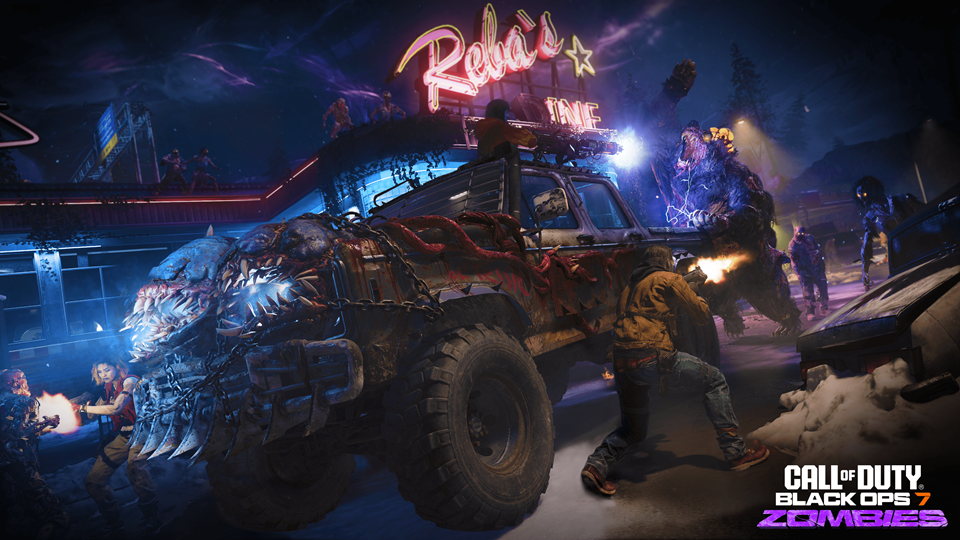
You can tackle Ashes as Weaver’s current crew or the classic Zombies cast. Three styles of play Standard, Survival, and the new Cursed mode reshape the experience dramatically. Cursed strips away conveniences like minimaps and pre-loaded weapons, turning the clock back to the Black Ops III era with its old-school point economy. Vandorn Farm, the solitary Survival map, channels Liberty Falls-style replayability with wall-buys, Perk-a-Cola, Gobblegum machines, and a vastly expanded Augment system boasting over sixty new bonuses.
Multiplayer is where Black Ops 7 truly hits its stride. After years of franchise fatigue from the ongoing sequel churn to the missteps of Black Ops 6 and Modern Warfare III this entry feels like Treyarch taking a deep breath and listening. It’s not the new matchmaking playlists or the “don’t think about it too hard” Gunsmith system that steal the spotlight. It’s the maps. Treyarch hasn’t launched a 6v6 lineup this strong since Black Ops 2 in 2012.
Alongside revamped versions of Raid, Hijacked, and Express, the game delivers thirteen new arenas that feel deliberately shaped by player feedback. Cortex and Scar offer simple layouts with smart elevation changes. Blackheart and Flagship transform offshore work zones into chaotic but tactical brawls. Den set inside a Japanese feudal castle now retrofitted with futuristic tech. Exposure the obligatory Australian dirt map comes dangerously close to joining the all-time greats. A couple of weaker maps, such as Retrieval, don’t derail the lineup, and even they prioritise clarity and readability over gimmicks like breakable windows or noisy environmental clutter.
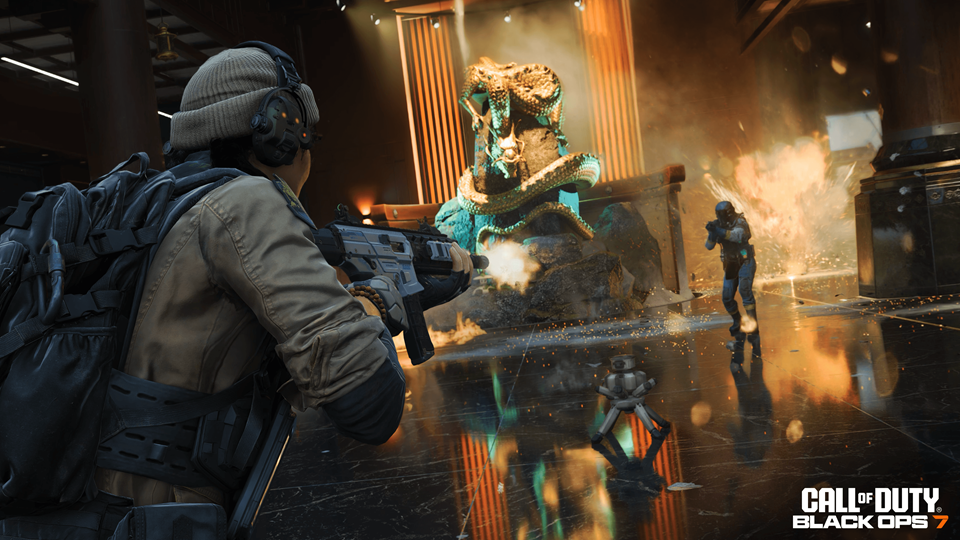
Weapons lean slightly toward the future without going full sci-fi. The game balances things out with new objective modes like Overload, which feels like the midpoint between Uplink and Capture the Flag. The roster of 30 guns includes standout assault rifles like the M15 and Peacekeeper MK1, while SMGs such as the Dravec 45 and the MPC-25 push the edge of fairness, Treyarch will almost certainly need to rein them in at some point or face a sea of angry gamers on Twitter.
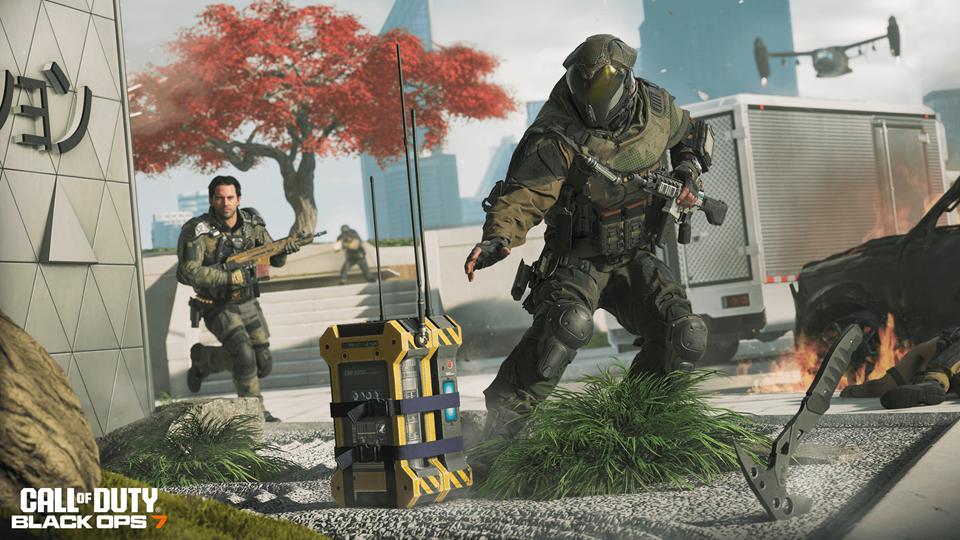
The new Overclock mechanic spices things up by giving each piece of equipment two tiers of enhancements like quicker Trophy System charges or Decoy Grenades that exclusively simulate footstep audio. They don’t break the sandbox, but they add tactical wrinkles that blend nicely with the returning Weapon Prestige system, back for the first time since 2018 and accompanied by Prestige Camos, special attachments, and a new Prestige Master tier featuring nostalgic skins like Bacon and Weaponized 115.
Movement also gets reworked. Omnimovement returns from Black Ops 6, but Tactical Sprint has been replaced with a wall-jump technique that’s surprisingly impactful. It allows players to peek corners or reposition aggressively, injecting some unpredictability reminiscent of the Specialist era from Black Ops III. Treyarch has also nerfed Rotational Aim Assist now requiring proper right-stick tracking for it to kick in fully introducing a skill curve console players will absolutely feel.
Even with a campaign that stumbles way more than it should, and a few uninspired mission beats and boss fights that feel so out of place, Black Ops 7 manages to carve out a strong identity simply by embracing variety in how you play. The developers’ fixation on expanding modes might still be hurting the single player offerings, and their public stance on SBMM remains suspiciously PR-friendly while not really addressing the real issues, the studio does prove once again that they know how to craft multiplayer and Zombies experiences that pull people back in night after night. Black Ops 7 might not be the sequel fans imagined or wanted, but in the most Black Ops sort of way, it champions individuality and sets a bar that future entries will have to work to clear whether that will be a challenge remains to be seen.
A copy of Black Ops 7 was provided by the publisher.
Call of Duty: Black Ops 7 Review
7 – Great
More info on our ten-point review scale can be found here but for a score of Seven:
This video game delivered constant fun and quality, while it lacks innovation it succeeds at what it set out to do, most players will have a positive experience.
Review Summary
A strong multiplayer and Zombies showing keeps this Call of Duty entry afloat, even as a weak, repetitive campaign holds it back. Great maps, fun movement, and a huge Zombies mode make it addictively playable just not the complete package it could’ve been.
Pros
- Multiplayer shines with Treyarch’s best 6v6 map lineup in years, mixing smart reworks and standout new arenas.
- Zombies returns to classic round-based tension while expanding into its biggest map ever with meaningful exploration.
- Overclock system adds clever, non-disruptive equipment depth without bloating the meta.
- Weapon Prestige’s return is nostalgic and rewarding, giving grinders a reason to dig deep again.
- Strong sense of variety across modes, from co-op campaign to Survival to Cursed Zombies.
Cons
- Campaign’s ambition outweighs its execution, resulting in repetition and muddled storytelling.
- Mission structure frequently falls into “clear room, find file” loops, undermining the surreal tone.
- Balance issues with early weapon roster, especially overtuned SMGs.
- Wall-jump’s learning curve and nerfed aim assist may frustrate casual console players.
- The series’ narrative legacy feels increasingly diluted by Treyarch’s mode-first priorities.
Video Review
For more 1-Up Games reviews, check out our review page, here.



 1-Up Games
You must be logged in to post a comment.