
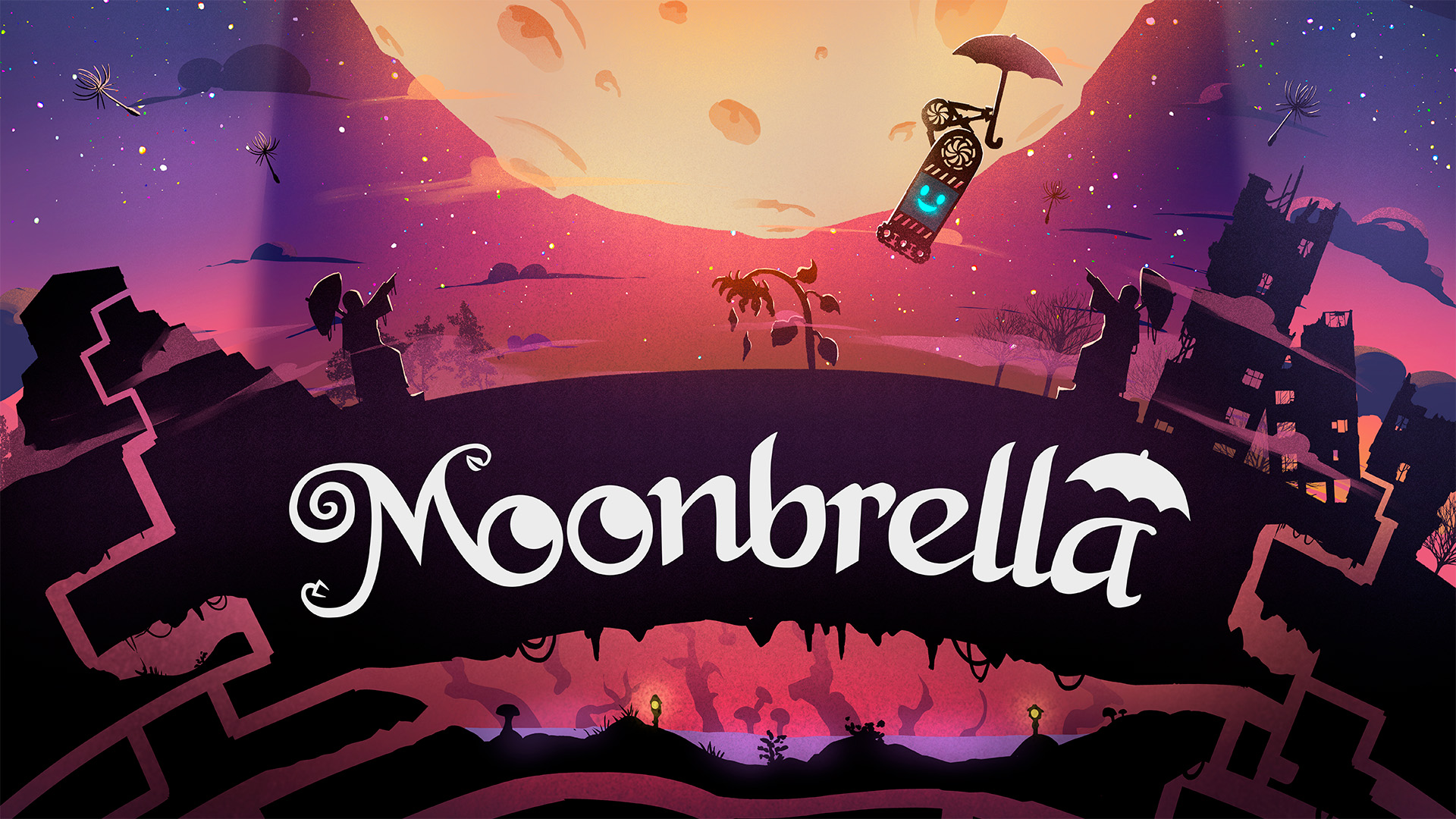
There’s a certain kind of indie game that feels like it was built around a single, slightly ridiculous idea and then pushed as far as it can possibly go. Moonbrella is exactly that.
Revealed during the latest INDIE Live Expo, developer Jett Williams confirmed that the 2D physics-based Metroidvania is headed to PC via Steam, Nintendo Switch, PlayStation 5, and Xbox Series X|S. No release date just yet, but the pitch alone has already carved out a lane: get to the moon using nothing but an umbrella and the game’s physics system will decide whether you make it or eat dirt trying.
At its core, Moonbrella is less about traditional platforming precision and more about controlled chaos. Every jump, vault, and glide is dictated by momentum, timing, and how well you understand the umbrella’s quirks. You’re not just pressing buttons you’re negotiating with the game’s physics engine.
That umbrella does a lot of heavy lifting, too. You can jab it into the ground to launch yourself forward, pop it open mid-air to slow your descent, or hook onto environmental objects to build speed and reach new heights. It’s a toolkit that sounds simple on paper but quickly opens up multiple solutions to every obstacle something Williams clearly designed with speedrunners in mind.

And that’s where Moonbrella starts to stand out. This isn’t just a Metroidvania about exploration it’s one that actively encourages players to break it. There are intended paths, sure, but also plenty of unintended ones for players willing to master the mechanics. Sequence breaking, creative routing, and shaving seconds off runs all feel like they’re baked into the DNA rather than patched in later.
Progression comes through upgrading the umbrella itself. As you explore, you’ll find replacement parts that expand your movement options, letting you access previously unreachable areas and refine your traversal. It’s a familiar loop structurally, but the physics-driven movement gives it a very different texture compared to more traditional entries in the genre.
The world itself leans into a quieter, slightly melancholic tone. You play as a lone robot wandering a planet long abandoned by humans, moving through dark caves, ancient ruins, and even an active volcano. The goal? Revive a dying sunflower trapped in the moon’s shadow a premise that’s just abstract enough to feel intriguing without overexplaining itself.

Along the way, you’ll collect flowers and gemstones scattered throughout the environment, adding another layer of exploration for players who want to fully comb through every corner of the map.
For Williams, the project also marks a personal milestone. Speaking during the reveal, they highlighted how surreal it feels to go from dreaming about making games to self-publishing one across major platforms. That DIY spirit seems to extend beyond development, too early traction for Moonbrella has been driven heavily by short-form content online.
“I grew up playing console games and fantasising about one day making my own,” Williams said. “So being able to publish them myself is a dream come true. It’s crazy just how much indies can do themselves these days.”
They also pointed to the game’s unexpected momentum on YouTube Shorts, noting that its performance has been surprisingly strong drawing comparisons to viral indie hits like Megabonk. It’s the kind of organic visibility that feels increasingly important for smaller projects trying to cut through the noise.

Right now, Moonbrella sits in that sweet spot where the concept is immediately understandable, but the skill ceiling looks incredibly high. If the physics feel as tight as they need to and that’s always the big “if” with games like this it could easily become one of those titles that quietly builds a dedicated community obsessed with mastering it.
For now, it’s one to keep an eye on especially if you’re the kind of player who sees a carefully designed level and immediately starts looking for ways to break it.


You must be logged in to post a comment.