
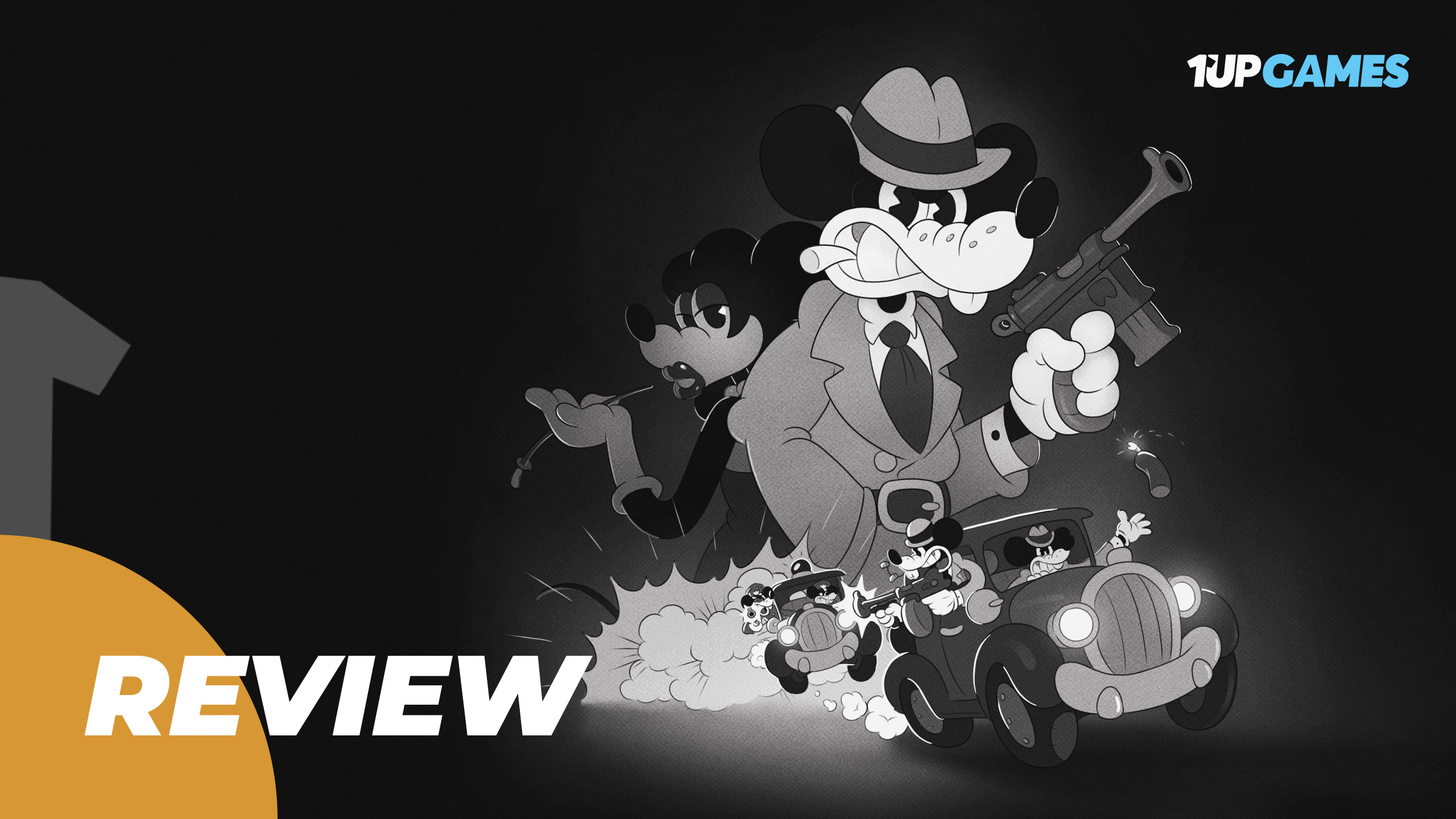
When Mouse first appeared in 2023, it felt less like a real game announcement and more like a proof-of-concept someone had uploaded to social media on a whim. The reveal trailer spread everywhere almost instantly, and for good reason. Its striking black-and-white visuals, exaggerated rubber hose animation, and unmistakable 1930s cartoon inspiration made it impossible to ignore. At the time, though, it was hard to imagine the project actually making it to release in a polished state. Plenty of stylish indie games capture attention with a clever aesthetic only to disappear into development limbo or arrive lacking substance beneath the surface.
Three years later, Mouse: P.I. For Hire has done something far more impressive than simply surviving. Fumi Games has transformed that early concept into a fully realized shooter with personality to spare. Yes, the visual style is still the immediate hook, and comparisons to Cuphead are unavoidable, but the finished product proves there is much more going on here than nostalgic animation tricks. Underneath the monochrome presentation is a surprisingly confident detective story, a satisfying old-school shooter, and one of the most charming worlds an indie FPS has produced in years.
After rolling credits and spending considerable time uncovering secrets around the grimy streets of mouseburg, it is clear that Mouse: P.I. For Hire succeeds because it refuses to rely solely on its gimmick. While it occasionally stumbles in areas like balancing and mission structure, the overall experience is memorable in ways that extend far beyond its art direction making it The Most Stylish Boomer Shooter of 2026

Name’s Pepper, Jack Pepper
The game follows Jack Pepper, a war veteran turned private investigator who operates a struggling detective agency in the city of Mouseburg. At first glance, Jack seems like the stereotypical noir protagonist: cynical, sarcastic, always one unpaid bill away from disaster. His latest assignment begins with the disappearance of a stage magician named Steve Bandel, but it quickly spirals into something far larger involving corrupt politicians, criminal organisations, and a wonderfully absurd underground economy centred around cheese contraband. In Mouse’s world, wedges of gorgonzola and packs of cheese sticks effectively replace alcohol and cigarettes, and the game fully commits to that bizarre alternate reality.
What surprised me most was how invested I became in the story itself. It would have been easy for the developers to treat the narrative as little more than connective tissue between firefights, but Mouse genuinely wants players to engage with its mystery. The plot constantly introduces new leads, suspicious characters, and overlapping conspiracies, and while the writing never reaches particularly profound territory, it remains entertaining throughout. Every mission uncovers another piece of the puzzle, giving the campaign a satisfying sense of momentum.
The City That Never Sleeps
Between levels, players return to a central hub area containing Jack’s office and a portion of the surrounding neighbourhood. This downtime becomes one of the game’s strongest features. Clues collected during missions are pinned onto an investigation board, gradually revealing connections and unlocking the next steps in the case. It is a simple mechanic and doesn’t require much more from you other than hitting one button to solve the clues, but it reinforces the detective fantasy in a way that many narrative shooters neglect.
The hub also provides opportunities to interact with the citizens of Mouseburg, and these conversations are consistently delightful. Whether speaking with the bartender, chatting with the mayor, or listening to random residents complain about the city’s problems, the writing rarely loses its charm. Every character feels exaggerated in that classic cartoon fashion without becoming one-note. The developers clearly enjoyed building this world, and that enthusiasm comes through constantly.

The script is packed with references to games, films, and pop culture. Some are subtle visual nods tucked away in the environment, while others are direct jokes aimed at genre fans. There are amusing call backs to everything from Resident Evil to Dark Souls, alongside playful digs at entertainment icons and industry trends. Thankfully, the humour lands far more often than it misses because it feels naturally woven into the world rather than desperately trying to chase internet meme culture and thank god for that.
Shooter for the Boomer
At its core, though, Mouse: P.I. For Hire is still a boomer shooter, and fans of classic first-person action will feel immediately at home. Movement is fast, combat is punchy, and levels are filled with hidden pathways, collectibles, and optional areas begging to be explored. Despite its mostly linear progression, the game captures that addictive sense of discovery that defined shooters from the 1990s and early 2000s.

Exploration is arguably where the game shines brightest mechanically. Secrets are hidden generously throughout every stage, but the developers strike an impressive balance between rewarding curiosity and avoiding frustration. Rather than forcing players to endlessly mash against random walls, destructible surfaces are often marked with humorous signs like “Totally Normal Wall,” or “Nothing Behind Here” turning secret hunting into a playful scavenger hunt instead of an exhausting guessing game.
Unfortunately, the rewards tied to exploration are not always as meaningful as they could have been. Most hidden areas contain large sums of currency, yet money itself has limited value. Ammunition is already plentiful throughout the campaign, making ammo purchases mostly unnecessary, and while players can spend cash on collectible cards or other extras, these rewards never feel especially impactful especially if you didn’t interact with the baseball card mini game which, to be fair, is really fun for a while. The game introduces weapon upgrades through a separate resource system, and it honestly feels like a missed opportunity not to connect those mechanics together more directly.

Even so, combat remains consistently entertaining thanks to the game’s creative arsenal. Every weapon feels distinct, both mechanically and visually, and enemies react differently depending on how they are killed. Flamethrowers reduce foes to ash, acid weapons melt enemies into grotesque puddles, and close-range shotgun blasts send cartoon heads exploding across the room. The exaggerated violence perfectly complements the old-school animation style, creating a bizarre mix of cheerful visuals and chaotic brutality.
Some balance issues do emerge as the campaign progresses. Certain weapons become dramatically more effective than others once upgraded, particularly the game’s equivalent of a Tommy Gun, renamed the James Gun. Fully upgraded, it tears through enemies and bosses with such efficiency that experimenting with alternative loadouts becomes less appealing. Even several late-game encounters can be trivialized by unloading upgraded automatic fire into enemies before their mechanics have time to matter.
Boss fights themselves are somewhat inconsistent. Visually, they are fantastic, filled with oversized cartoon monstrosities and exaggerated animations that look ripped straight from a lost animated film reel. Mechanically, however, many encounters boil down to shooting oversized health bars rather than engaging with creative patterns or arena mechanics. There are exceptions, but too many bosses rely on endurance over ingenuity… Bullet Sponges as they are more affectionately called.

Movement abilities gradually expand throughout the adventure, adding some welcome variety to traversal. The double jump becomes an essential tool almost immediately and integrates naturally into exploration and combat. Other abilities, such as gliding or using a grappling hook, appear more situationally and feel somewhat underutilised overall. There are moments where these mechanics shine, but the game rarely pushes them as far as it could have.
Oh What A World
One aspect that initially seemed promising but ultimately feels underdeveloped is the overworld system. Earlier previews showcased a Cuphead-style world map where Jack drives between locations, suggesting a more open structure with mission choice and revisitable areas. In practice, the overworld functions mostly as visual flavor. Outside of a couple moments where players choose between two missions, progression is largely linear, and previously completed stages cannot be revisited.

That limitation becomes particularly frustrating near the end of the game. Mouse runs roughly fourteen hours depending on exploration habits, and by the time credits rolled, I genuinely wanted reasons to keep playing. Some weapons and upgrades arrive surprisingly late, leaving little opportunity to fully experiment with them. Likewise, missing collectibles means replaying the entire campaign from scratch instead of simply revisiting specific levels. Considering how enjoyable the core gameplay loop is, the lack of mission replay functionality feels like a genuine oversight.

Still, the presentation work throughout the game is extraordinary. Mouse: P.I. For Hire is one of the most visually distinctive shooters released in recent years. The combination of fully 3D environments and hand-drawn 2D character sprites creates a striking contrast that immediately stands out. Every animation embraces classic rubber hose techniques, giving characters an exaggerated bounce and elasticity that perfectly recreates the feel of 1930s animation.
Importantly, the visual style never feels like a novelty that wears thin after an hour or two. Even after extended play sessions, there is constant joy in simply watching the world move. Weapons sway with exaggerated cartoon motion, HUD icons animate with personality, and enemies contort dramatically when defeated. The sheer variety of character designs is equally impressive. NPCs, enemies, and background characters all feature subtle differences that help the world feel alive rather than repetitive.

Players worried that the black-and-white presentation might become visually exhausting can relax. After only a few minutes, the lack of colour stops registering as unusual because the art direction is so cohesive. The contrast-heavy environments remain readable during combat, and the monochrome aesthetic becomes part of the game’s identity rather than a limitation.
The Sweet Sounds of The City
The audio side of the experience deserves praise as well. The English voice cast delivers consistently strong performances, led by Troy Baker as Jack Pepper. Baker leans fully into the noir detective persona without turning the character into parody, grounding the story even when the world itself becomes increasingly ridiculous. The soundtrack also deserves mention, particularly the main musical theme that appears in multiple forms throughout the game, including moments where Jack casually whistles it during exploration.

A World Worth Investigating
Mouse: P.I. For Hire is not flawless. Its mission structure could be more flexible, several mechanics feel underdeveloped, and combat balancing occasionally undermines experimentation. Yet none of those issues diminish the fact that Fumi Games has created something genuinely special. Beneath the striking visuals lies an entertaining detective adventure, a satisfying retro shooter, and a world overflowing with personality.
For fans of boomer shooters, noir storytelling, or classic animation aesthetics, this is an easy recommendation. More importantly, it proves that Mouse was never just a stylish trailer chasing viral attention. Against the odds, Fumi Games delivered a game with real substance behind the style, and that makes Jack Pepper’s first case worth investigating.
Mouse: P.I. For Hire Review – A Boomer Shooter Done Right
8 – Amazing
More info on our ten-point review scale can be found here but for a score of Eight:
This video game was thoroughly enjoyable with strong mechanics, design and moments not without flaws, but its strengths outweigh its shortcomings significantly.
Review Summary
For fans of boomer shooters, noir storytelling, or classic animation aesthetics, this is an easy recommendation. More importantly, it proves that Mouse was never just a stylish trailer chasing viral attention. Against the odds, Fumi Games delivered a game with real substance behind the style, and that makes Jack Pepper’s first case worth investigating.
Pros
- Striking 1930s rubber-hose visual style that stands out immediately
- Surprisingly engaging detective narrative with a solid mystery structure
- High-quality voice acting, including a strong lead performance
- Great sense of atmosphere from music, animation, and art direction combined
- Levels packed with secrets that reward exploration without frustration
Cons
- Weapon balance issues, with a few options clearly outperforming others
- Limited mission replayability reduces post-game engagement
- Exploration rewards often feel underwhelming compared to effort required
Video Review
For more 1-Up Games reviews, check out our review page, here.


Leave a Reply